Using Earned Value Analysis to Control Business Transformation
by: Jon Beck

by: Jon Beck
Business transformation projects based on technology are notorious for being over budget, under performing and lacking expected results. We believe this is because most organizations (a.k.a., consultants) focus on traditional project management metrics when reporting project status. We believe it’s time to deploy EVA to EVERY transformation project you undertake.
EVA is a well-known concept in some industries like construction. It is a tool used to monitor project status based on time and money. Traditional approaches, track project progression based on planned or budgeted costs v. actual costs. Where EVA differs is that it adds a third dimension – work performed – specifically the value of the work performed to date.
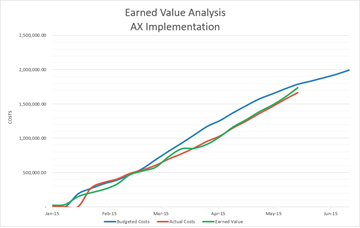
A typical snapshot of the financial status of a project might look like this:
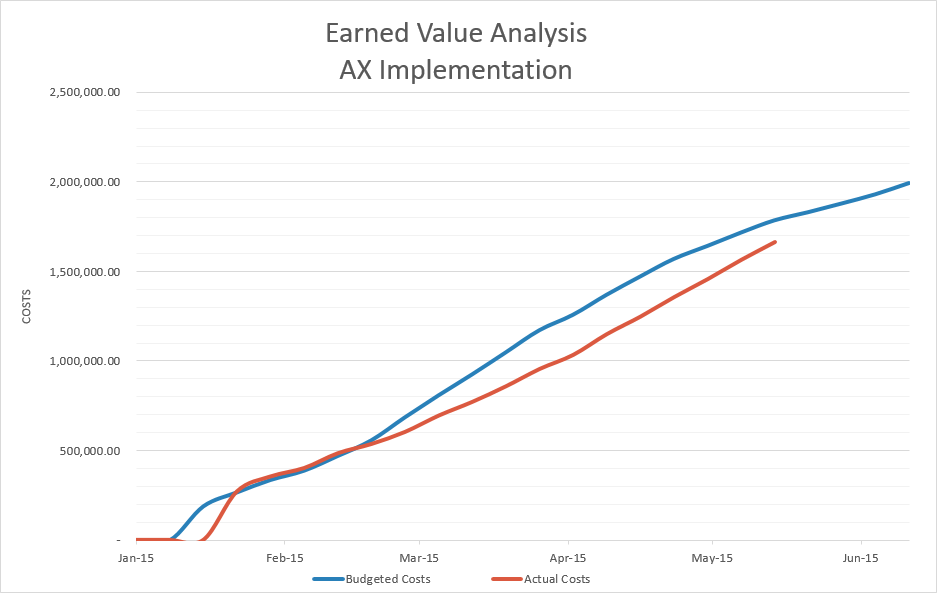
Using this veiw, this project looks to be performing amazingly well. Actual costs to date are well below budgeted costs for the project-to-date. Executive management reviewing this status would most likely be very pleased. However, that’s only 2/3 of the story.[pms-restrict subscription_plans=”1607″] Let’s add a line for earned value and see what the result looks like:
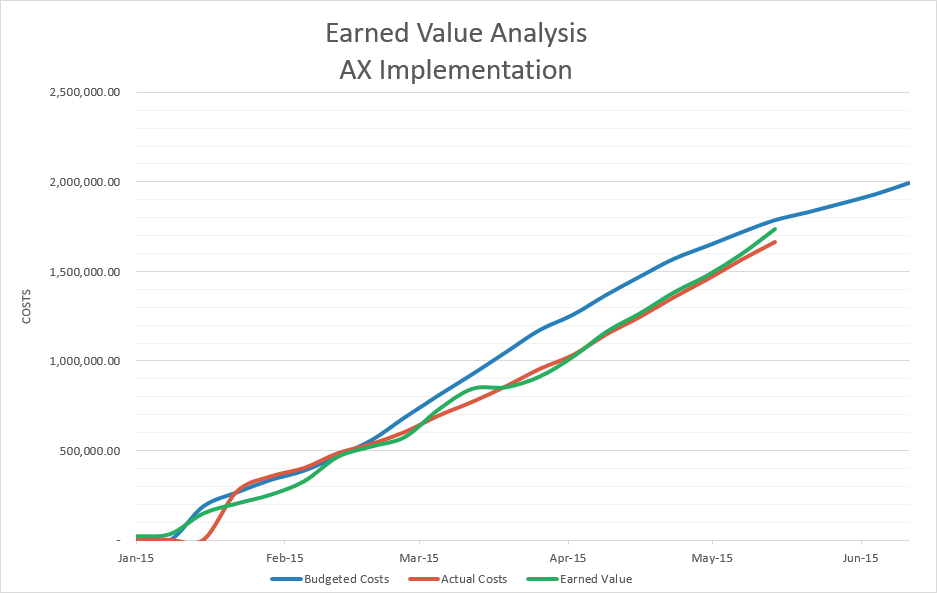
In this case, actual costs are below budgeted costs for a reason: the team is not getting their work done according to plan. Many things might be happening:
When Executive Management reviews project status from an EVA perspective, their take-away is quite different. Primarily that leadership team has some work to do.
EVA requires three things to be effective:
EVA is a powerful business transformation tool that can be used for any business transformation initiative under taken. At Pivot Point, we focus on business transformation resulting from the implementation or re-implementation of business applications. However, EVA can and should be used for other things like:

 CRM – CPQ – ERP: It’s All In the Data